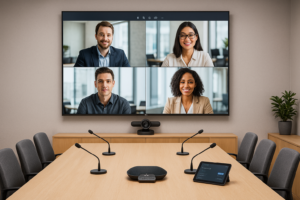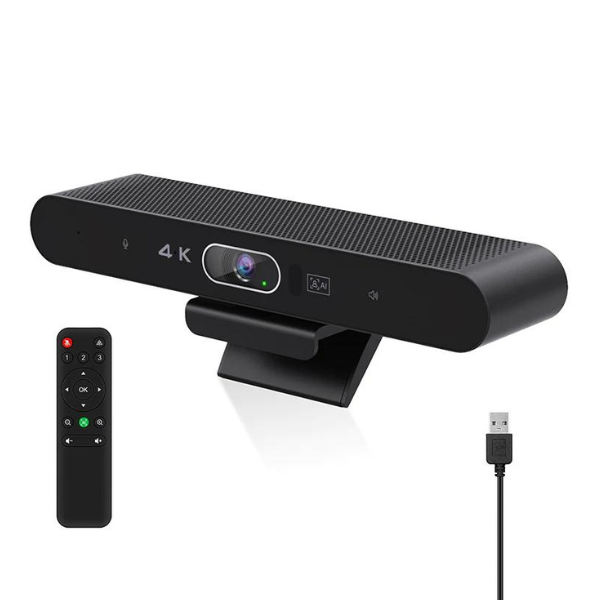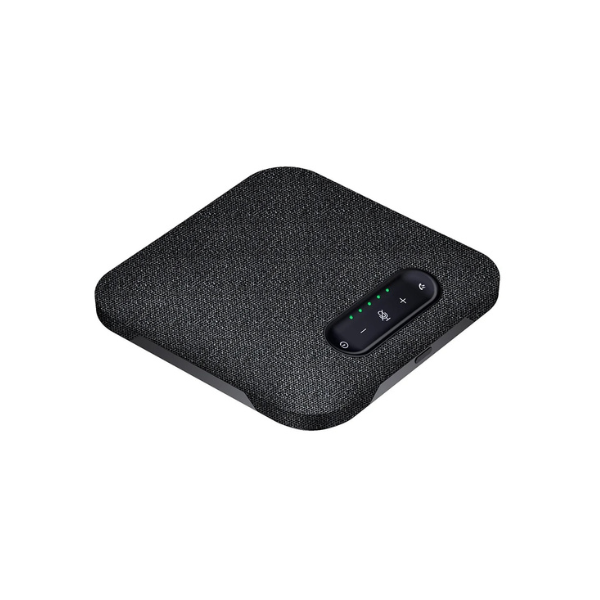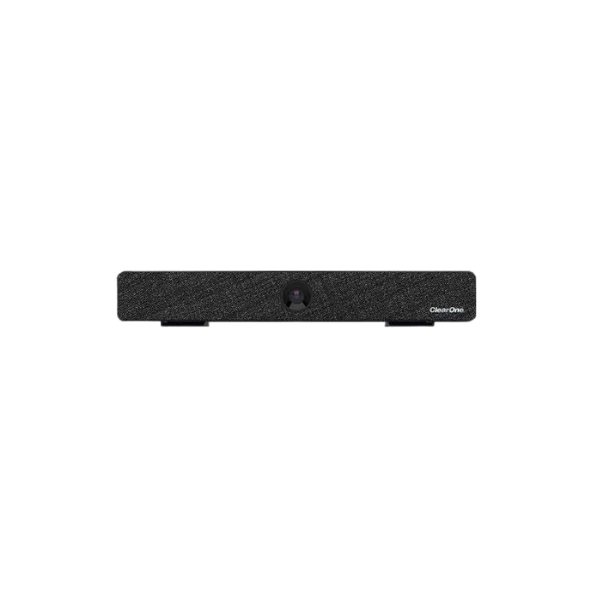
Have you ever struggled with tangled cables during a presentation? Or perhaps faced delays because of connectivity issues? These common challenges can disrupt meetings and hinder productivity. A wireless presentation system can solve these problems, offering a seamless and efficient way to share content during meetings.
What Is a Wireless Presentation System?
A wireless presentation system allows users to share content from their devices to a central display without physical connections. This technology supports various devices, including laptops, smartphones, and tablets, enabling smooth and efficient presentations.
Key Benefits of Wireless Presentation Systems
1. Enhanced Collaboration
Wireless systems enable multiple participants to connect simultaneously, fostering real-time collaboration. This feature is particularly beneficial in brainstorming sessions and team discussions, where input from various members is crucial.
2. Improved Professionalism
Eliminating the need for cables and adapters presents a clean and organized meeting environment. This professional setup can positively influence clients and stakeholders, reflecting well on the company.
3. Increased Flexibility
With wireless systems, presenters can move freely around the room, engaging more effectively with the audience. This mobility enhances the presentation experience and allows for better interaction.
4. Cost Efficiency
While the initial investment may be higher, wireless systems can reduce long-term costs associated with cable replacements and maintenance. Additionally, they can decrease setup times, leading to more efficient use of resources.
5. Simplified Setup
Wireless systems often feature plug-and-play functionality, reducing the time and effort required to set up meetings. This simplicity allows staff to focus more on content preparation rather than technical configurations.
Market Trends and Adoption Rates
The adoption of wireless presentation systems has been on the rise, driven by the increasing demand for efficient and flexible collaboration tools. According to a report, the wireless presentation solutions market was valued at approximately USD 2.5 billion in 2024 and is projected to reach USD 5.8 billion by 2033, growing at a CAGR of 10.2%.
In the United States, nearly 79% of enterprises report deploying wireless display tools for meetings and internal training. This widespread adoption underscores the importance of integrating such systems into business operations.
Choosing the Right Wireless Presentation System
When selecting a wireless presentation system, consider the following factors:
- Compatibility: Ensure the system supports various devices and operating systems used within your organization.
- Security: Opt for systems with robust security features to protect sensitive information during presentations.
- Ease of Use: Choose systems with user-friendly interfaces to minimize training time and technical issues.
- Scalability: Select systems that can accommodate future growth and additional users as your business expands.
Implementing Best Practices for Video Meetings
To maximize the effectiveness of video meetings, consider the following best practices:
- Test Equipment: Always test your wireless presentation system before meetings to ensure everything functions correctly.
- Clear Communication: Encourage participants to mute microphones when not speaking to reduce background noise.
- Engage Participants: Use interactive features like polls or Q&A sessions to keep participants engaged.
- Professional Environment: Ensure your meeting space is well-lit and free from distractions to maintain professionalism.
Conclusion
Integrating a wireless presentation system into your business operations can significantly enhance collaboration, professionalism, and efficiency. By embracing this technology, you can streamline meetings and foster a more dynamic work environment.